Fit Life · Growth Library
Start a Morning Stretch Routine
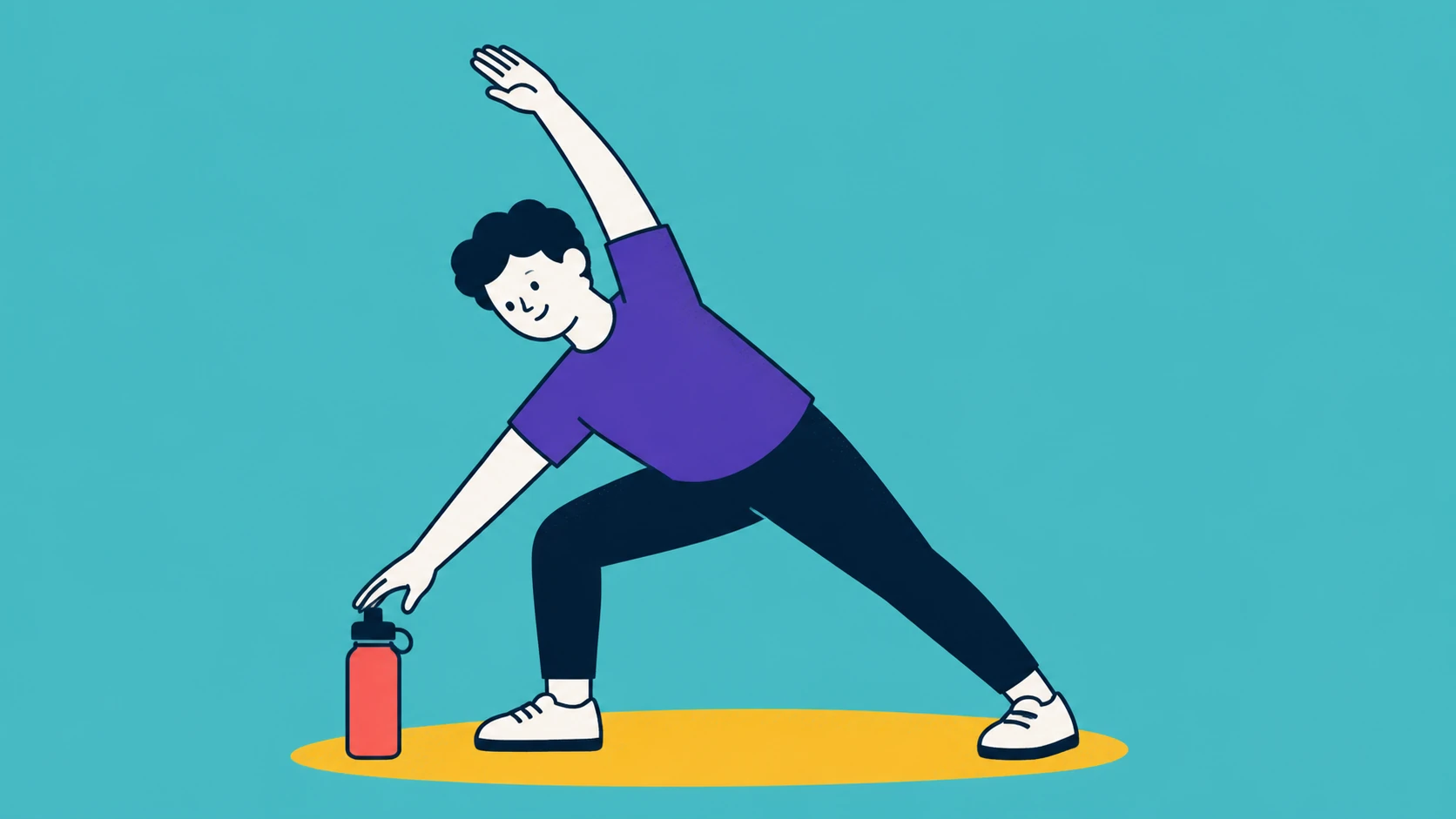
Try this
Use a short, gentle flexibility routine as a morning movement cue if that timing suits you. Move slowly only as far as is comfortable, start with a few simple movements, and build up gradually rather than forcing a fixed 10-to-20-minute progression.
Check-in: Did the movements feel comfortable and controlled? Did I stop or modify anything that caused pain or made me feel unwell, and is this routine still appropriate for me?
Evidence: Reviewed · source · NHS — Flexibility exercises
Review note: Public content is replaced by a sourced gentle-flexibility protocol. Morning timing and ten minutes are presented as optional practical settings rather than medical prescriptions; safety boundaries and gradual progression are aligned with current NHS exercise guidance.
Safety: This record is general educational material, not medical advice, diagnosis, treatment, or a substitute for professional care.
A short morning flexibility routine can be used as a simple movement cue if mornings suit your schedule. The timing and duration are practical choices, not a medical prescription. The NHS describes gentle flexibility exercises that can be done at home, recommends moving only as far as is comfortable, and advises building up gradually.
1. Choose a small sequence
Start with a few gentle movements rather than designing a complete mobility programme. The NHS flexibility guide includes examples such as neck rotation, a sideways bend and a calf stretch. Use established instructions for the movement you choose instead of inventing a more aggressive variation.
2. Use comfort as the boundary
Move slowly and only as far as is comfortable. Do not force range to complete a timer, rep count or target position. A shorter comfortable session is preferable to turning a simple routine into a test of tolerance.
3. Treat duration as a setting, not a dose
If ten minutes fits your morning, use it as a simple boundary. If a shorter sequence is more appropriate, use that. The NHS notes that there are no specific recommendations for how much time should be spent on strength and flexibility exercises, so Brali does not prescribe a 10-to-20-minute progression as an evidence-based target.
4. Build up gradually
When the routine remains comfortable and useful, add a movement, a repetition or a little more time gradually. Do not increase duration simply to maintain a streak or hit a preset progression rule.
5. Use clear safety boundaries
The NHS exercise safety guidance recommends getting healthcare advice before trying general exercises if you are unsure they are suitable for your fitness level, or if you have a health problem, injury, symptoms, feel unwell, have had a recent serious health event or operation, or are pregnant or recently gave birth. Stop the exercise if you feel pain or become unwell.
This Brali entry is general educational material. It is not a treatment plan for pain, injury or a medical condition.
6. Review suitability, not streak length
In your tracker, record whether the short routine happened, whether the movements felt comfortable and controlled, and whether anything needed to be stopped or modified. The useful signal is whether the routine remains appropriate and easy to perform safely, not whether you reached a prescribed number of minutes.
Questions to consider
Does the routine need to last 10 minutes?
No. Ten minutes can be a convenient starting boundary, but there is no universal evidence-based duration for a morning flexibility routine. Start with a small comfortable sequence and build gradually if it remains appropriate.
How far should I stretch?
Move slowly only as far as is comfortable and do not force range. The NHS flexibility examples repeatedly use comfort as the boundary and recommend building up gradually.
When should I get medical advice before using the routine?
Get advice from a healthcare professional if you are unsure whether the exercises suit your fitness level, or if you have a health problem, injury, symptoms, feel unwell, have had a recent serious health event or operation, or are pregnant or recently gave birth. Stop exercising if you feel pain or become unwell.
Sources
Evidence state: reviewed. Sources are provided so the underlying material can be inspected directly.
Maintenance record
Review history
Current status: Reviewed. An editorial or evidence review is recorded and no later event changes that conclusion.
2026-08-18 · reviewed · Brali editorial agent Source: protocol-content-overrides-gentle-mobility.json
Replace an inherited stretching article containing unsupported recovery, pain, heart-rate, adherence, and progression claims with a conservative flexibility routine grounded in current NHS exercise guidance and safety information.
Browse the review ledger · Challenge or update this hack
Implementation observations can trigger a review, but they cannot change an evidence conclusion by themselves. Commercial relationships do not control review status or outcomes.
Continue from here
Choose the next useful path.
Article versions
Brali keeps substantive article history visible. Later reviews may refresh wording, sources, examples, or boundaries without silently replacing the record.
- Version 2025-10-06: first recorded publication in the migrated Brali corpus.
- Evidence review 2026-08-18: reviewed by Brali editorial agent; evidence state is
reviewed.
Canonical source record · Evidence state: reviewed.