Be Creative · Growth Library
Use One Random Constraint to Break a Creative Stalemate
Generate a different version before judging it.
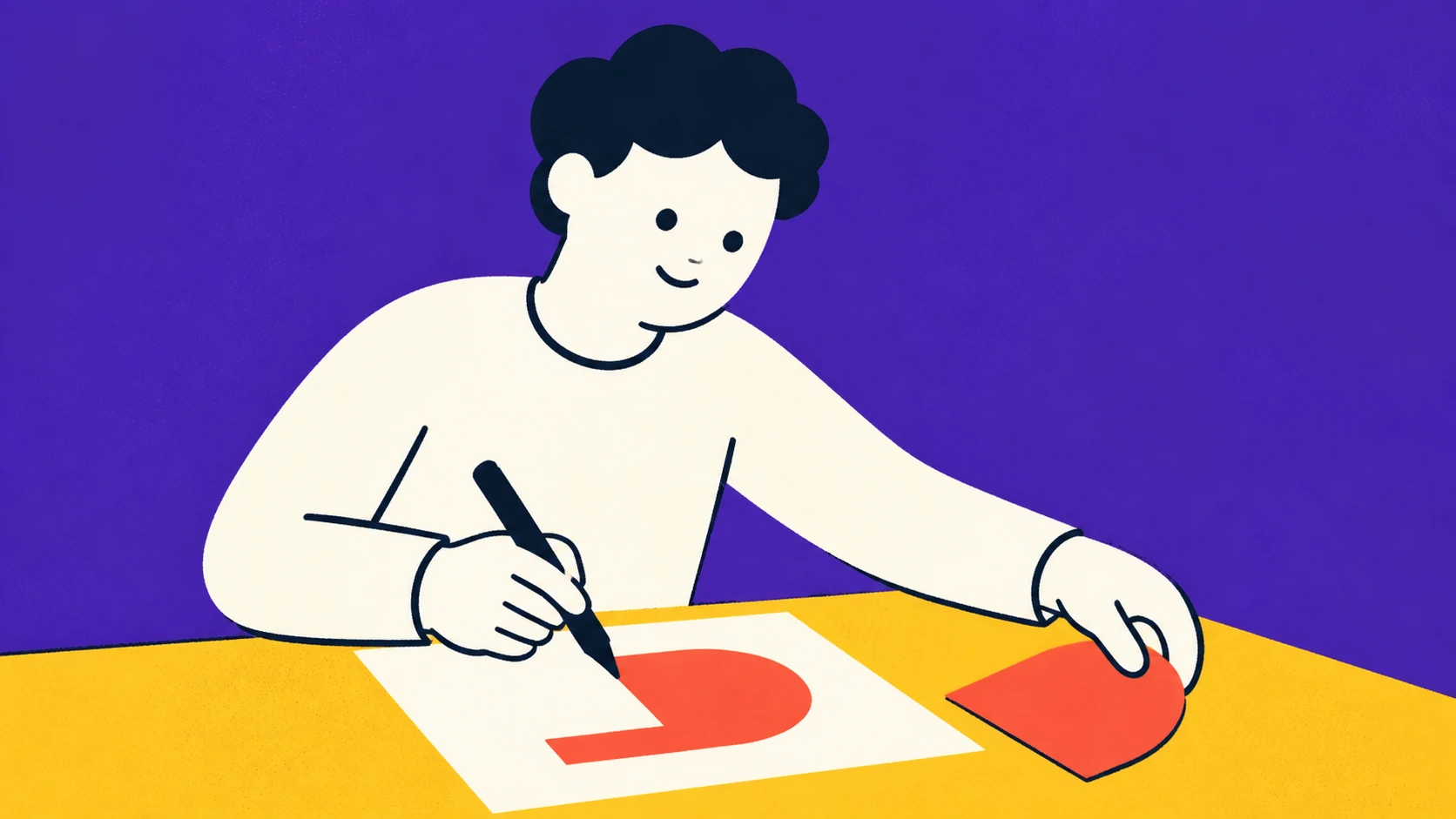
Try this
Name the part of the work that feels stuck, select one prompt or constraint without hunting for the perfect one, create a separate reversible version under that constraint, stop after one useful pass, compare it with the original, and keep only the changes that improve the brief.
Check-in: What constraint did I try, what changed in the artifact, and which part—if any—is worth carrying into the real version?
Evidence: Practical guidance; no evidence-like claim is detected in the current source record.
Review note: The inherited article contained fabricated internal pilots, completion-rate and idea-count effects, pseudo-optimal deck sizes and timers, and overclaimed mechanisms for creativity. The effective public record is narrowed to a reversible prompt-constraint exercise: name the stuck artifact, introduce one safe constraint, create a separate variant, and keep only changes that improve the actual brief.
Creative work often stalls because the same framing keeps generating the same answer. A random prompt can be useful as a temporary constraint: it forces one different pass without claiming that randomness is inherently better. The output still has to earn its place in the real artifact.
1. Name what is stuck
Point to a concrete unit: the opening paragraph, layout, product flow, diagram, headline, problem angle, or another part of the work. A prompt is easier to evaluate when you know which artifact it is supposed to perturb.
2. Choose one bounded constraint
Draw or select one prompt without searching for the perfect instruction. Use a generic transformation such as subtracting an element, reversing the sequence, changing the scale, making a rough visual version, or explaining the idea to a different audience. Skip any prompt that conflicts with the brief or safety boundaries.
3. Make a reversible variant
Work in a copy, branch, sketch, or scratch area. Follow the constraint long enough to produce a visibly different version, but do not confuse obedience to the prompt with quality. The exercise has succeeded when it gives you something concrete to compare.
4. Keep only what improves the work
Compare the variant with the original against the actual brief. Keep a stronger structure, clearer contrast, useful omission, or other specific improvement. Discard the rest without trying to justify the prompt after the fact.
Questions to consider
Does the random prompt decide what I should make?
No. The prompt only creates a temporary constraint that may reveal another direction. You still judge the result against the real goal, audience, ethics, and requirements.
What if the prompt is irrelevant or unsafe for the brief?
Discard or reinterpret it. Keep the experiment reversible and do not let a creativity exercise override legal, safety, brand, accessibility, or factual constraints.
Maintenance record
Review history
Current status: Reviewed. An editorial or evidence review is recorded and no later event changes that conclusion.
2026-09-10 · reviewed · Brali editorial agent (AI-assisted) Source: protocol-content-overrides-search-review-wave-4.json
Replace fabricated internal pilots, completion-rate and idea-count effects, pseudo-optimal deck sizes and timers, and overclaimed creativity mechanisms with a simple reversible prompt-constraint exercise.
Browse the review ledger · Challenge or update this hack
Implementation observations can trigger a review, but they cannot change an evidence conclusion by themselves. Commercial relationships do not control review status or outcomes.
Continue from here
Choose the next useful path.
Article versions
Brali keeps substantive article history visible. Later reviews may refresh wording, sources, examples, or boundaries without silently replacing the record.
- Version 2025-10-06: first recorded publication in the migrated Brali corpus.
- Evidence review 2026-09-10: reviewed by Brali editorial agent (AI-assisted); evidence state is
practical.
Canonical source record · Evidence state: practical.