Be Creative · Growth Library
Use One Constraint to Produce a Different Creative Draft
Limit one dimension, make a variant, then judge the result against the brief.
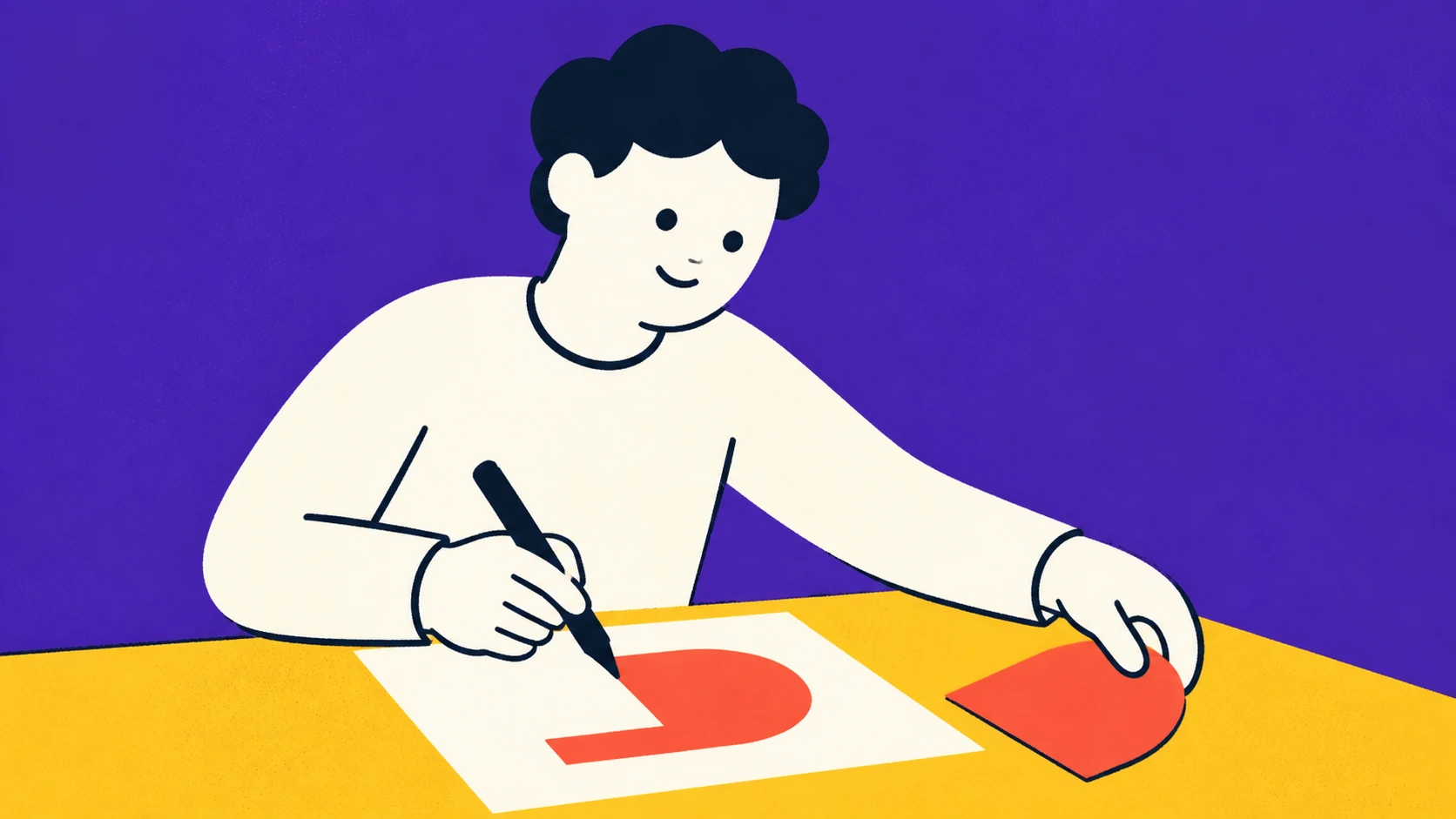
Try this
Name the artifact and the part that feels too open, choose one constraint that does not violate the brief, create a reversible variant without adding new constraints midstream, compare the result with the original requirements, and keep only the useful difference.
Check-in: What did I constrain, what changed in the artifact, and did the constraint reveal anything worth keeping?
Evidence: Practical guidance; no evidence-like claim is detected in the current source record.
Review note: The inherited creativity article included unsupported mechanisms, fabricated output comparisons and observations, physiological engagement claims, pseudo-optimal session lengths, and arbitrary completion targets. The effective public record treats a constraint only as a reversible way to generate a different draft: constrain one dimension, create a variant, and keep only changes that improve the actual brief.
An open brief can create a large search space before anything concrete exists. A temporary constraint gives the next draft an edge: one dimension is deliberately limited so you can make something different and judge it. The constraint has no authority beyond the variant it helps produce.
1. Locate the open-ended part
Identify where choice is expanding faster than progress: too many formats, tools, features, visual directions, story structures, ingredients, or implementation paths. Keep the rest of the brief unchanged.
2. Constrain one dimension
Choose one rule that is clear and reversible. Examples include using fewer components, fitting the idea into a shorter format, explaining it for one audience, removing one feature, or working inside a bounded session. Do not stack arbitrary rules until the exercise becomes the problem.
3. Produce a separate variant
Make the constrained version in a copy, sketch, branch, or draft. Follow the temporary rule long enough to produce something comparable, and resist adding more options before the first variant exists.
4. Judge the artifact, not the constraint
Compare the variant with the real brief. Keep a clearer structure, stronger omission, simpler implementation, or other concrete improvement when it helps. Remove the constraint when it no longer serves the work.
Questions to consider
What kinds of constraints are useful?
Use constraints that are easy to understand and undo, such as fewer components, a shorter format, one tool, a fixed audience, a different sequence, or a bounded working window.
What if the constraint makes the work worse?
Discard the variant or change the constraint. The rule is a temporary generator of alternatives, not a requirement that deserves to survive when the artifact becomes less useful.
Maintenance record
Review history
Current status: Reviewed. An editorial or evidence review is recorded and no later event changes that conclusion.
2026-09-10 · reviewed · Brali editorial agent (AI-assisted) Source: protocol-content-overrides-search-review-wave-6.json
Replace unsupported creativity mechanisms, fabricated output comparisons and observations, physiological engagement claims, pseudo-optimal session lengths, and arbitrary completion targets with a reversible constraint-based drafting exercise.
Browse the review ledger · Challenge or update this hack
Implementation observations can trigger a review, but they cannot change an evidence conclusion by themselves. Commercial relationships do not control review status or outcomes.
Continue from here
Choose the next useful path.
Article versions
Brali keeps substantive article history visible. Later reviews may refresh wording, sources, examples, or boundaries without silently replacing the record.
- Version 2025-10-06: first recorded publication in the migrated Brali corpus.
- Evidence review 2026-09-10: reviewed by Brali editorial agent (AI-assisted); evidence state is
practical.
Canonical source record · Evidence state: practical.